
With so many scientific tools, why do designs fail?
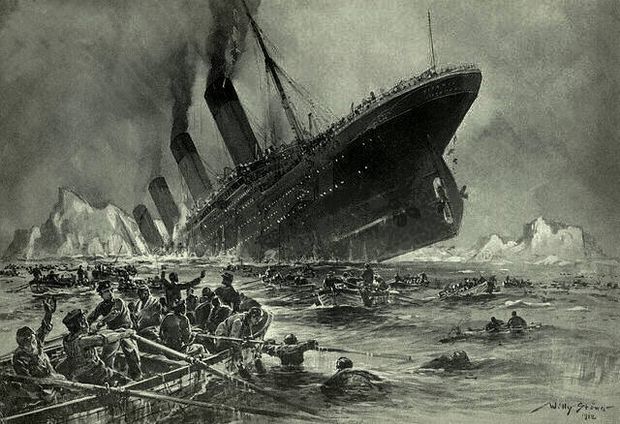
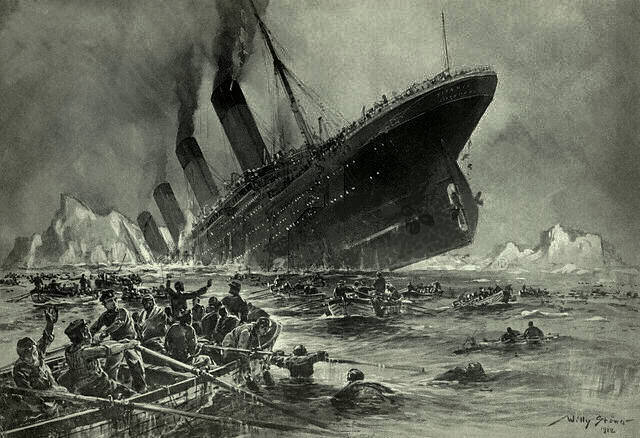
Why the unsinkable Titanic sank? Why did the thoroughly tested Columbia space shuttle burned out on return? Why Toyota had to call back thousands of cars designed by expert engineers?
Design might fails because somebody made a stupid mistake in his calculations, like in the old joke about the bridge that fell down because the engineer forgot to multiply by two. It might happen, but it is extremely rare. Most design failures happen because one specific mode of failure was never checked against, because it was never identified as risky.
The sad truth is that we cannot design anything to work. We can only try to find out if a certain design might fail in a certain specific way. This is one reason why we cannot send computers to design things. They are excellent in optimizations, when we tell them what parameter to optimize and for what mode of failure.
The Tacoma narrows bridge collapsed in 1940 because nobody thought that wind might arouse resonant vibrations in the bridge. It was OK for what it was designed for: for static loads. No computer would have suggested another mode of failure.
The Titanic sank because nobody asked what happens if the ship scratch its side on an iceberg. Had it been thought, maybe the designers would have ordered that it would be better to throw the engines to full back and bump into the iceberg head on! It would have been damaged badly, but it would not sink.
If only the designers of the Columbia would have only thought of the possibility of losing their thermal shield bricks on launch, the Columbia would have still be in service today. For a fact, once they identified the problem, they had no big difficulty to fix it.
The philosopher of science, Karl Popper, said that in order to be scientific a claim must be "falsifiable". Moreover, he suggested that a claim cannot be proved by repeating experiments with positive results. No matter how many times it passes a test, there is always a chance that one more test will prove it wrong. To prove a theory requires infinite number of successful tests. One failure is enough to disprove it.
So it is in our world of design. The failures described, all have shown that these designs were not perfect. They had errors embedded in them. And these errors are all the result of not being able to foresee the single mode of failure that could go wrong. No scientific calculation can help against an unidentified mode of failure.
What is the lesson to be learned? Be paranoid! Always look around searching for the mode of failure you might have missed.
I like to call rules by names. The name I gave this rule is "the law of the wild west".
It goes as follows:
The guy who kills you will be the one hiding behind the bush, that you failed to notice!